How to Personalize a Shopify App Without AI
 WpAppBuilder
 Follow WebPlanex on Google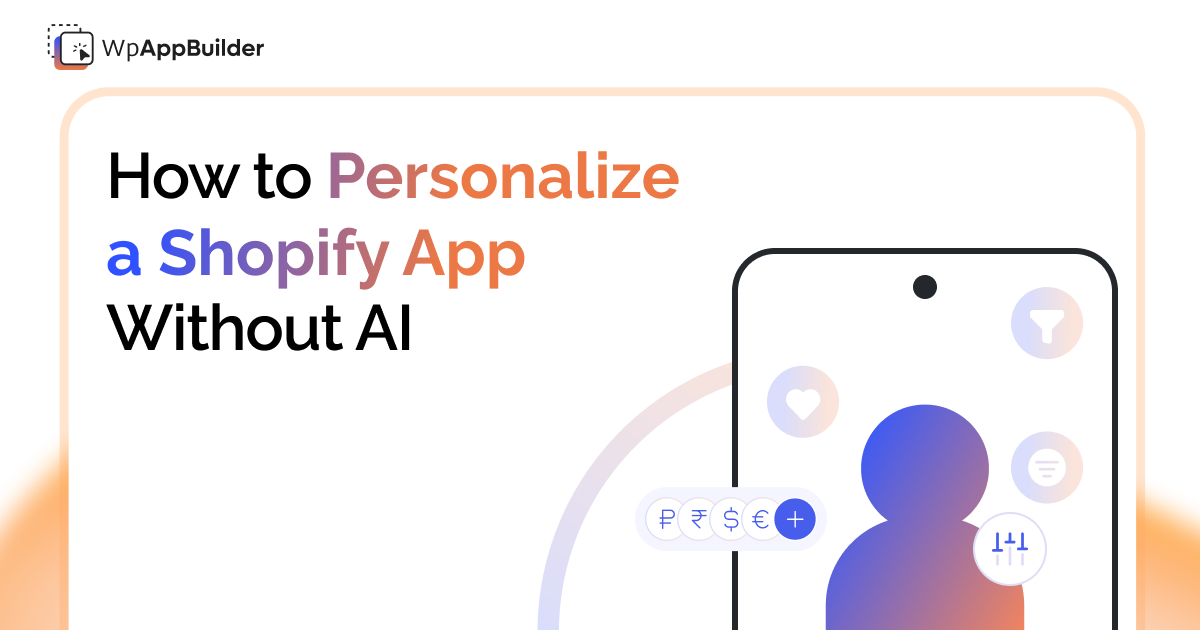
Everyone's talking about AI personalization these days. "For You" feeds, AI push notifications, AI growth assistants that supposedly know your customers better than you do. It's easy to feel like you're falling behind if you don't have one of these bolted onto your app. Here's the thing, though: most of what actually makes a mobile shopping experience feel personal has nothing to do with AI. Shoppers aren't thinking about what's running behind the app. They're thinking about whether it makes shopping easier for them. So, why personalize Shopify app experiences? Because the little things that make shopping easier are often what make an app feel personal.
What Does "Personalized" Actually Mean to a Shopper?
Forget the AI part for a minute. What does the shopper actually notice when they're using the app?
- Can they save something they liked and actually find it again later
- Can they narrow down a huge catalog without endless scrolling
- Can they shop in a language they're genuinely comfortable in
- Do prices just make sense without them doing currency math in their head
- Can they pick up right where they left off instead of starting over from scratch
None of that takes prediction. It just takes attention. A personalized shopping experience isn't always about an app guessing what someone wants next. A lot of the time, it's simply about getting out of their way.
A personalized shopping experience should feel convenient and relevant, not complicated.
Wishlist, Sort, and Filter Do More Than People Think
These features get overlooked constantly because they're not flashy. A wishlist app function lets someone save something today and actually come back to it next week instead of losing it in a pile of browser tabs. Sort and filter let a shopper browse however works for them, by price, by category, by whatever they actually care about, instead of scrolling through everything in some random order the store happened to set.
None of this needs a fancy recommendation engine. It just needs to exist and work properly. These are the actual building blocks of a custom Shopify app that adapts to how a store's real customers shop, not some generic template pretending to feel personal.
Speaking the Shopper's Language, Literally and in Currency
Here's where localization starts to matter. DHL's 2025 E-Commerce Trends Report found that 64% of e-commerce retailers sell to customers in other countries, while 62% offer local language and currency options across their international markets.
countries, while 62% offer local language and currency options across their international markets.
A multi-language app makes product information and navigation easier for shoppers in different markets. A multi-currency app does the same for pricing. Nobody has to stop and figure out what a price means before deciding whether to buy.
RTL layout matters for right-to-left markets too. Arabic and Hebrew shoppers should be able to use the app in the direction they're accustomed to, rather than adjusting to a layout built for someone else.
That's e-commerce localization in practical terms. You're not just translating the store. You're making the shopping experience work for the market you're selling to.
Where WebPlanex Mobile App Builder Fits In
You don't have to build all these features yourself. With a Shopify mobile app builder, the main app features are already there, so you can focus on what your store actually needs.
With WebPlanex Mobile App Builder, shoppers can save products, sort and filter the catalog, and choose the language and currency that work for them. RTL layout is also available for stores selling to right-to-left markets.
Customers who leave their cart can get a reminder later. Deep linking can also take them back to a product or cart instead of making them search for it again. For stores with physical locations, there's a store locator in the app too.
None of this requires putting together a dev team or getting into lengthy custom Shopify app development. WebPlanex hands merchants the building blocks. What a store actually needs from them comes down to its own customers, not some one-size-fits-all AI layer acting like it already has the answer.
Conclusion
AI can absolutely be worth adding as a layer later on. It just isn't where personalization has to start. The fundamentals, saved preferences, easier discovery, a shopper's own language and currency, and a way back to what they were looking at do most of the actual work already, and honestly, that's the real answer to why personalizing a Shopify app experience matters more than which technology happens to power it.
Download WebPlanex Mobile App Builder to build a Shopify mobile app that feels relevant and personal from the first tap, without overcomplicating any of it.
Related blogs